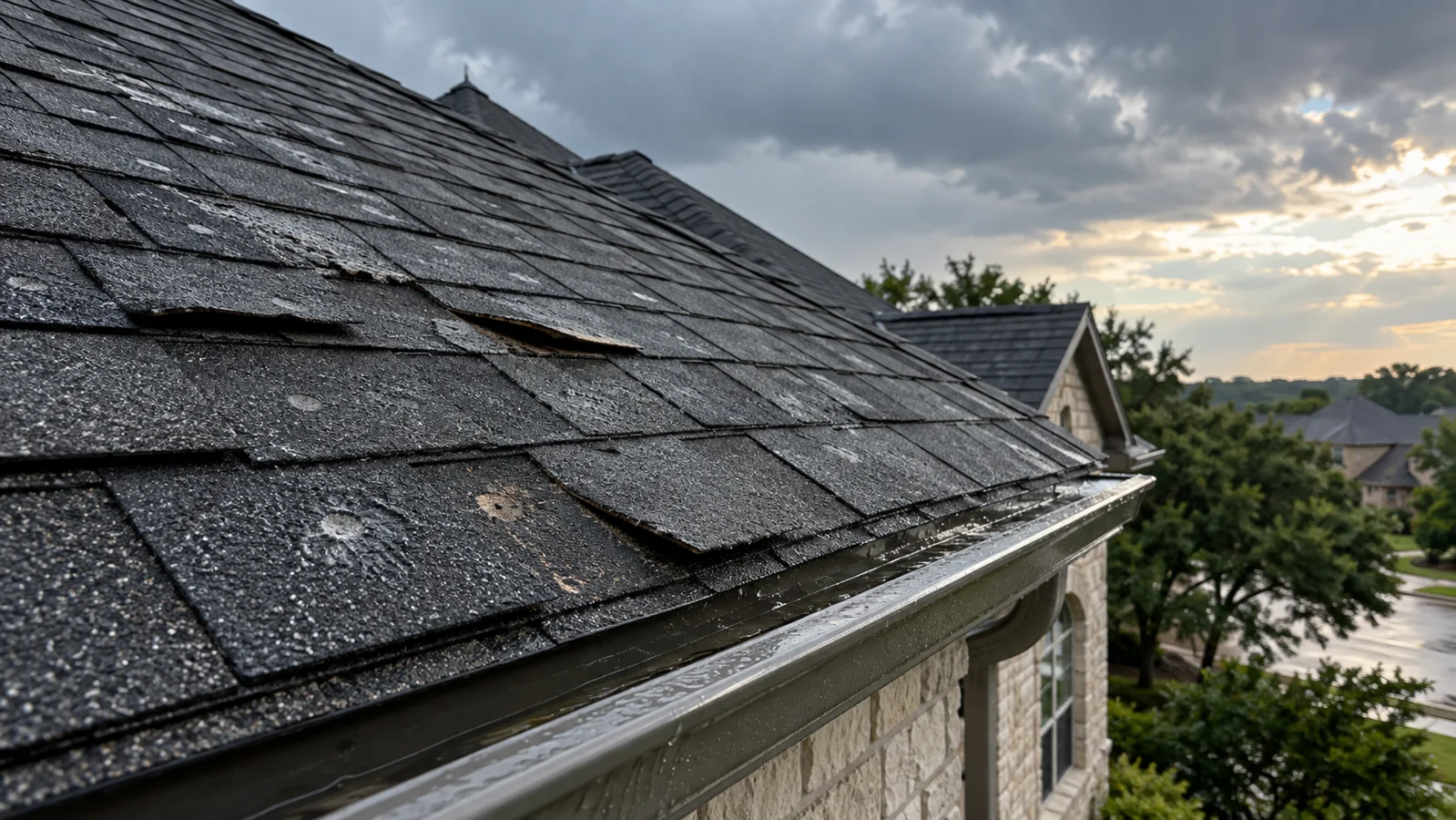
Storm restoration still matters. But a roofing business built around the next insurance check is exposed to more uncertainty than it used to be.
Ask a roofer who has worked a hail market for a decade and they will tell you the same thing: finding damage and getting a job approved are two different sales processes. That gap has widened as insurers scrutinize roof claims, deductibles consume more of the job, and some policies pay depreciated value for older roofs.
There is real data behind the frustration, but it needs to be read correctly. Weiss Ratings found that 42.1% of homeowners’ claims nationwide closed without payment in 2024, compared with 25.7% in 2004. In its review of 2025 filings, 15 large insurers closed at least half of claims without payment. Those are figures for all homeowners’ claims, not roof claims alone. A zero-payment claim can mean the damage fell below the deductible, the loss was excluded, or the customer did not pursue it. It is not a measure of wrongful denials. For a contractor planning a sales pipeline, though, the practical point remains: a filed claim is not a funded roof.
The customer’s share of the job is growing
The decision does not end with approval. A homeowner can have covered storm damage and still face an uncomfortable out-of-pocket number. The Insurance Information Institute notes that some older roofs are insured on an actual cash value basis, with depreciation taken out of the settlement. Verisk reports that nonrecoverable depreciation represented nearly 20% of total roof claims in 2025, up from 16% in 2021. Meanwhile, its average roof replacement cost reached $17,631 in 2025.
Put a deductible and depreciation against a replacement at that price, and the conversation changes. The homeowner may choose a repair, delay the work, seek financing, or pay for a different system than the one originally discussed. A roofer who treats every storm inspection as a likely full replacement can spend a lot of time on work that never becomes a job.
From storm chasers to exterior partners
That does not mean walking away from insurance restoration. Storm damage is still a legitimate source of work, and customers need contractors who document the scope accurately. It does mean building a second way to win business—one that does not depend on an adjuster’s decision.
For some companies, that starts close to home: planned replacements, repairs, maintenance, and better roofing systems. For others, the logical next step is the rest of the building envelope. Siding, windows, and gutters are often discussed with the same homeowner, sold by the same rep, and scheduled around the same exterior project. A contractor who can scope those trades well can offer a more complete solution and create opportunities outside storm season.
The hard part is execution. Roofing experience does not automatically make a team good at window configurations or siding takeoffs. Each category has its own measurements, product options, labor assumptions, and material ordering rules. Expansion only works when the business can price and deliver the new trade as reliably as its core service.
A more durable sales mix
There is no credible national tally proving roofers have collectively abandoned insurance work for siding and windows. The stronger conclusion is narrower: relying on insurance-funded replacements alone makes revenue harder to forecast, and broadening the offer is a sensible response for contractors with the operational capacity to do it well.
The question for a roofing owner is not whether the next storm will produce leads. It will. The better question is whether the company can keep selling when a claim produces a partial payment—or no payment at all. The contractors who can move between insurance restoration, customer-paid roofing, and related exterior work will have more ways to answer yes.